29 January, 2011

Wartburg 312 Limousine (1956) - DeAgostini/IST Models

       Wartburg este una dintre cele mai vechi marci de automobile germane. Isi trage numele de la castelul Wartburg de langa orasul Eisenach, unde a luat fiinta aceasta marca auto. Wartburg 312 a fost produs incepand cu anul 1956 pana in 1965, cand a fost inlocuit de Wartburg 353. Era disponibil in variante sedan, combi, pickup, coupe, roadster si cabrio. Motorul sau era unul in doi timpi, de 900 cmc, 3 cilindri. A fost exportat e tot cuprinsul Europei si in State, fiind o priveliste destul de comuna si in Romania anilor '60.

       Macheta este tot din colectia DeAgostini si produsa de IST Models. Printre cele mai reusite componente se numara siglele, perfect lizibile si blocurile optice care sunt diferentiate pe culori, lucru rar pt DeAgostini. S-a optat pt varianta in 2 culori, dupa opinia mea o alegere perfecta. Nu la fel de reusite sunt stergatoarele si oglinzile. Erori nu are si pe ansamblu este o machete peste medie.


Wartburg 312 Limousine (1956) - DeAgostini/IST Models

        Wartburg is one of the oldest german car brand. It gets the name from the Wartburg castle near the city of Eisenach, where this car was developed. Wartburg 312 entered production in 1956 and was built until 1965 when it was replace with the Wartburg 353. It was available in multiple body styles: sedan, estate, pick-up, coupe, roadster,  cabrio. It had a 2-stroke, 900 cmc, 3 cylinder engine. It was exported all across Europe and USA, being a common sight in Romania in the '60s.

        The scale model is also from the DeAgostini collection, produced by IST Models. Badges are among the most well made features of this model. The backlights have different colors, which is unusual to DeAgostini models. They chosed a 2 color paint job, which i find very good. The mirrors and the wipers are a bit rough. It does not have replication errors, being an above average model


12 January, 2011

Trabant 601 - (1963) - DeAgostini/IST Models

        Trabant este un automobil produs in fosta Germanie de Est (DDR) la uzina VEB Sachsenring Automobilwerke din Zwickau. Este cel mai comun autoturism produs in DDR, produs in peste 3 milioane de exemplare si exportat in tarile comuniste, dar si in afara lor. Cu performantele sale medii, cu motorul in 2 timpi care scoate mult fum, caroseria din "carton" si aspectul lui amuzant, a fost iubit, urat si subiectul multor bancuri. Cu toate astea, lista de asteptare era de pana la 15 ani, iar cei care apucau unul se considerau norocosi si il pastrau cu grija. A fost prima masina care era mai scumpa la mana a doua decat noua.
Numele sau "Trabant" inseamna "satelit", si a fost ales in 1957, anul lansarii primului satelit artificial, Sputnik.
        Trabant 601 este al doilea model, intrat in productie in anul 1963, fara mari diferente fata de primul, cu exceptia designului.

        Macheta, este produsa de IST Models pt DeAgostini. Mi se pare cea mai reusita reproducere a acestei masini la 1:43, in comparatie cu ce am mai vazut. Este bine realizat, fara erori. Chiar m-a surprins placut stergatoarele, fin reprezentatate. Decalurile sunt bine aplicate si lizibile. Interiorul si stopurile in stilul DeAgostini, monocolor.


Trabant 601 - (1963) - DeAgostini/IST Models

        Trabant is a vehicle that was produced in the former East Germany (DDR) at the VEB Sachsenring Automobilwerke factory in Zwickau. It is the most common car made in DDR, produced in over 3 millions pieces, and exported in all the Communist Block, and even outside. With his average performance, 2 stroke, smoky engine, "cardboard" body, and its funny looking, it was loved, hated and subject of many jokes. Even so, the waiting list for getting a Trabant was up to 15 years long, and the ones who got one were very caring with it. It was the first car which was cheaper to buy it new, that second hand. Its name, "Trabant" means "satellite" and it was given in 1957, the year of the first artificial satellite, Sputnik.
        Trabant 601 was the second model, entered in production in 1963, not very different from the first one, except the design.

       The scale model, is produced by IST Models for DeAgostini. It looks very good when compared with the same model from other producers. It is well made without errors. I was pleasantly surprised by the wipers, very fine made. The decals are clear and readable. The interior and the backlights are DeAgostini style, monocolored.


01 January, 2011

Barkas B1000 Minibus - (1970) - DeAgostini/IST Models

        Barkas B1000 a fost o furgoneta produsa intr-o fabrica noua din Republica Democrata Germana (DDR), pe locul fostei fabrici Framo, in orasul Karl-Marx-Stadt (actual Chemnitz), vechea fabrica fiind luata de rusi ca reparatii de razboi, la sfarsitul anilor '40. Productia a inceput in 1961 si a continuat pana in 1991. A fost propulsat initial de un motor de 45 de cai, in trei cilindri si doi timpi. Acest motor a fost derivat din cel de la DKW si a fost folosit in paralel si de Wartburg. A fost considerat echicvalentul lui VW T1 si T2 pentru Germania de Est, fiind considerat chiar mai bun din punct de vedere practic si al configurabilitatii, datorita amplasarii frontale a motorului. A fost destinat in principal serviciilor publice, iar persoanele private asteptau pana la 14 ani pt unul. S-au produs aproximativ 175.000 de exemplare.

        Macheta este produsa de IST Models. Ea reproduce varianta microbus a Barkas-ului, alte variante fiind duba inchisa, fara geamuri, si pick-up, pe care sper sa mi le adaug candva la colectie. Produsa de IST, pt DeAgostini, macheta are lipsurile specifice machetelor de revista. Cel mai mare minus mi se pare lipsa farurilor de ceata, care desi optionale ii dau un aspect deosebit Barkas-ului. Am impresia ca nici masca nu urmareste exact conturul corect. Oglinzile si stergatoarele sunt realizate peste medie, inscriptiile de asemenea. Jantele sunt asortate cu caroseria si frumos realizate.


Barkas B1000 Minibus - (1970) - IST Models

         Barkas B1000 was a van produced in a new factory from Deutsch Democratic Republic, on the site of the Former Framo factory, in the actual city of Chemnitz. Production started in 1961 and continued until 1991. It had a 3 cyilinder, 3 stroke, 45 hp engine. This engine derived from the DKW and was also used by Wartburg. Barkas was considered the equivalent of VW T1 and T2 for the East Germany, some features making it even better. It was much more variable in its configuration due to the frontal engine placement. It was mostly used by the public services. Private people waiting upto 14 years to get one. Aprox 175.000 pcs. were produced.

          The scale model is produced by IST Models. It replicates the minibus version of  the Barkas, some other versions being panel van and pick-up, which I hope to add to my collection sometimes. It has some lacks, specific to magazine models. The biggest lack is the missing fog lights. They were optional, to the real car, but they make the Barkas look nicer. It is possible that the front grille is also a bit wrong, but I am not very sure. The mirrors and the wipers are above average, the decals are too. The rims are assorted to the body, and very nice made.


30 December, 2010

Barkas B1000 "Pompieri" - (1970) - IST Models

       Barkas B1000 a fost o furgoneta produsa intr-o fabrica noua din Republica Democrata Germana (DDR), pe locul fostei fabrici Framo, in orasul Karl-Marx-Stadt (actual Chemnitz), vechea fabrica fiind luata de rusi ca reparatii de razboi, la sfarsitul anilor '40. Productia a inceput in 1961 si a continuat pana in 1991. A fost propulsat initial de un motor de 45 de cai, in trei cilindri si doi timpi. Acest motor a fost derivat din cel de la DKW si a fost folosit in paralel si de Wartburg. A fost considerat echicvalentul lui VW T1 si T2 pentru Germania de Est, fiind considerat chiar mai bun din punct de vedere practic si al configurabilitatii, datorita amplasarii frontale a motorului. A fost destinat in principal serviciilor publice, iar persoanele private asteptau pana la 14 ani pt unul. S-au produs aproximativ 175.000 de exemplare.

       Macheta, care reprezinta un vehicul de interventii, este produsa de IST Models. Este o macheta "branduita" IST, nu una de revista. A venit cu postament si clopot de plastic transparent. Detaliile sunt de nivel mai ridicat, exceptand niturile din faruri. Stopurile sunt colorate separat, geamurile au chedere argintii iar stergatoarele sunt fin redate. Oglinzile exterioare au "sticla" dar macheta nu are oglinda retrovizoare. La interior avem scaune maro, iar bordul are instrumentele redate prin decaluri.


Barkas B1000 "Feuerwehr" - (1970) - IST Models

        Barkas B1000 was a van produced in a new factory from Deutsch Democratic Republic, on the site of the Former Framo factory, in the actual city of Chemnitz. Production started in 1961 and continued until 1991. It had a 3 cyilinder, 3 stroke, 45 hp engine. This engine derived from the DKW and was also used by Wartburg. Barkas was considered the equivalent of VW T1 and T2 for the East Germany, some features making it even better. It was much more variable in its configuration due to the frontal engine placement. It was mostly used by the public services. Private people waiting upto 14 years to get one. Aprox 175.000 pcs. were produced.

        The scale model, which replicates a emergency vehicle is produced by IST Models. It is a original IST Model, not a magazine one. It came with a stand and a PC-Box. The details are high level, except the headlihts, that have rivets. The backlights are independently coloured, the windows have silver gaskets, and the wipers are fine made. The side mirrors have "glass" but the model does not have a rear-view mirror inside. The seats are brown and the dashboards has the gauges made as decals.


27 December, 2010

Zuk A-15 "Pompieri" - (1967) - DeAgostini/IST Models

       Zuk A-15, care in poloneza inseamna "gandac", a a fost o duba (furgoneta) produsa de FSC (Fabryka Samochodów Ciężarowych) in Polonia intre 1958-1998. A fost construit pe sasiul, suspensia si motorul de la Warszawa M20. Aceasta, la randul ei, era de fapt rusoaica GAZ Pobeda produsa sub licenta in Polonia. Zuk si Nysa, bazata pe acelasi sasiu, au fost singurele furgonete din Polonia comunista. Zuk a fost in principal vandut organizatiilor de stat dar si unor persoane private. Pe toata perioada productiei, design-ul s-a schimbat doar la nivelul fetei, in 1967. Posta poloneza si Pompierii au fost principalii utilizatori, Zuk fiind folosit ca masina de pompieri mai ales in micile comunitati.

       Macheta este produsa de IST Models, pt DeAgostini. Este al doilea numar special al colectiei, destul de rar la ora actuala. Este o macheta reusita, fara erori majore. Are doar oglinzile putin strambe. Doar chederul de la parbriz e negru, restul nu sunt vopsite. Pe plafon sunt montate furtunele si scarile, foarte bine replicate. La interior totul este negru, fara decaluri pt instrumente dar replicat corect. Stergatoarele sunt mai bine realizate decat la alte machete DeAgostini.

Zuk A-15 "Pompieri" - (1967) - DeAgostini/IST Models

       Zuk A-15, which in Polish means "bug", was a van produced by FSC (Fabryka Samochodów Ciężarowych) in Poland between 1958-1998. It was based on the Warsawa M20 chassis. Zuk and Nysa, based on the same chassis, were the only vans produced in the communist Poland. Zuk was mainly sold to state organizations and a few to private persons. During its production period, the design changed only slightly on the front part, in 1967. Polish mail service and the Firefighters were the main users of the angular Zuk. Was used as a firetruck in the small communities.

       The scale model, is produced by IST Models, for DeAgostini. It's the second special issue of the collection, quite rare. It's a well made model, without major errors. Only the mirrors are a little crooked. The windscreen gasket is black but the others are not painted. On the roof there are the fire-hoses and ladders, very good replicated. All the interior is black, with no decals. The wipers are better than other DeAgostini models.


08 December, 2010

Nysa 522 "Milicja" (1968) - DeAgostini/IST Models

      Dubita Nysa a fost produsa in orasul Nysa din Polonia, din 1958 pana in 1994. Bazata pe aceeasi platforma ca Zuk, platforma imprumutata de la Warszawa, Nysa a avut un design rotunjit, spre deosebire de Zuk, care avea un design unghiular. A fost mult mai buna si mai confortabila pentru transportul de pasageri. In perioada de inceput a productiei, a fost singura duba disponibila, din aceasta cauza fiind folosita intensiv ca Ambulanta si ca masina a Militiei. Varful de popularitate a fost atins in anii '70, iar pana la oprirea productiei uzina din Nysa a fabricat 380.575 de masini. Modelul 522 a fost ultimul din gama Nysa. Nysa a fost exportata in toate tarile Blocului Estic, dar si in cateva tari din Asia sau Africa. In Romania au ajuns cateva dupa '89. Erau o priveliste destul de comuna pana prin 1995, fiind una din masinile micilor SRL-uri, alaturi de Barkas, Zuk, Transit sau T2.

      Macheta reproduce modelul folosit de Militia Poloneza. Este produsa de IST ca numar special pt DeAgostini Polonia. Nu a fost produsa deocamdata in varianta "de strada". Macheta este frumoasa, cu detaliile specifice de militie foarte frumos reproduse. Grila are gaurile reproduse fin, dar nu perforate, farurile au nituri. Chederelor groase le-ar fi stat mai bine negre, iar cromul ce margineste capota motorului nu este reprodus. Personal, imi place mult aceasta masina, de aceea am si facut un mic efort sa o achizitionez, fiind o macheta destul de rara.


Nysa 522 "Milicja" (1968) - DeAgostini/IST Models

      The Nysa van was produced in the city of Nysa in Poland, between 1958-1994. While based on the same platform as the Zuk (taken from Warszawa), Nysa had a rounded design, unlike the angular Zuk. It was much better and confortable as a people carrier. In the first year of production it was the only abailable van, this is why it was extensively used as a Ambulance and Miltia car. It was very popular in the 70s. Until 1994 when the production ceased, about 380.000 Nysas were made. The 522 was the last model. Nysa was exported to all the East Block countries, but also in some countrie from Asia and Africa. In Romania, some were imported in the early '90. It was very popular between the small emerging companies here.

      The scale model replicates the model used by the Polish Militia. It is made by IST as a special series for DeAgostini Poland. It was not produced yet as a street-version. It is very beautiful and well made, with all the specific details for a police car. The front grille has fine holes, not perforated, the headlights have rivets. The window gaskets should be black, and there are some chrome parts missing. I like this model very much, that's why i made some effort to purchase it. It's a quite rare model.

26 November, 2010

UAZ 469 (1973) - DeAgostini/IST Models

       UAZ 469 este un autovehicul de teren produs de UAZ (Ulyanovsky Avtomobilny Zavod) in Rusia. A fost introdus in 1973 pentru a inlocui vechiul GAZ 69. A fost si este, in general, folosit de Armata Rosie si de alte forte ale Pactului de la Varsovia, cat si de fortele paramilitare din Blocul Estic. In URSS a fost folosit de catre toate organizatiile guvernamentale care aveau nevoie de o masina de teren robusta. Fiabilitatea lui a ajuns legendara, dar masina nu a fost disponibile publicului larg, decat intr-o foarte mica masura.

      Macheta, produsa pt DeAgostini, este reusita, ca si celelalte 2 masini de teren prezentate pana acum. Macheta are o singura oglinda, farurile au nituri, iar vopseaua este mata. Semnalele ar cam trebui sa fie portocalii, dar in general sunt multumit de realizarea acestei machete.

UAZ 469 (1973) - DeAgostini/IST Models

        UAZ 469 is a all-terrain vehicle produced by UAZ (Ulyanovsky Avtomobilny Zavod) in Russia. It was released in 1973 to replace the obsolete GAZ 69. It was, and still is, used by the Red Army and other military and paramilitary forces throughout the East Block. In former USSR, it was use by all the government organizations which needed a though off-road car. His reliability became legendary, but the car was not available for the public.

        The scale model, produced for DeAgostini is well-made like the other 2 offroaders described before. It has only one mirror, the headlights have rivets and the paint is matte. The turning lights should be orange. I am happy with the realization of this model.

17 November, 2010

GAZ 67 (1943) - DeAgostini/IST Models

           GAZ 67 a fost un autovehicul de teren care a intrat in productie la uzina GAZ din Rusia, in 1943. A reprezentat echivalentul sovietic a Jeep-ului Willys si a fost utilizat intens in cel de-al doilea razboi mondial. A fost succesorul lui GAZ 64, cu care se aseamana mult, dar care a fost produs intr-un numar redus de exemplare. Printre diferente se numara ampatamentul marit si un rezervor mai mare. GAZ 67 era propulsat de un motor de 54 de cai-putere si atingea viteza de 90 km/h. S-a produs pana in 1953, cand i-a cedat locul lui GAZ 69

          Macheta este produsa de IST Models si face parte din colectia DeAgostini din Polonia. Unul asemanator a aparut si in Rusia. Are o realizare spartana cu detaliile de baza. Grila nu este perforata sau macar vopsita. Stergatoarele sunt una cu parbrizul iar la exemplarul meu, copertina este montata stramb.

GAZ 67 (1943) - DeAgostini/IST Models

           GAZ 67 was a Russian all-terrain vehicle, which started production in 1943 at the GAZ plant. It was the soviet equivalent of the Willys Jeep and it was extensively used in WW2. It was the successor of GAZ 64. They were very similar but GAZ 64 was built in a low number of pieces. GAZ 67 had a bigger wheelbase and bigger gas tank. It was powered by a 54 hp engine, able to take the vehicle at 90 km/h. It was produced until 1953 when it was replaced by the GAZ 69.

           The scale model is produced by IST and it belongs from the Polish Deagostini Collection. A similar one was released in Russia too. It has a rough finish with only base details. The front grille is not perforated nor painted. The wipers are the same piece with the windscreen and, at my model, the canvas roof is crooked.


12 November, 2010

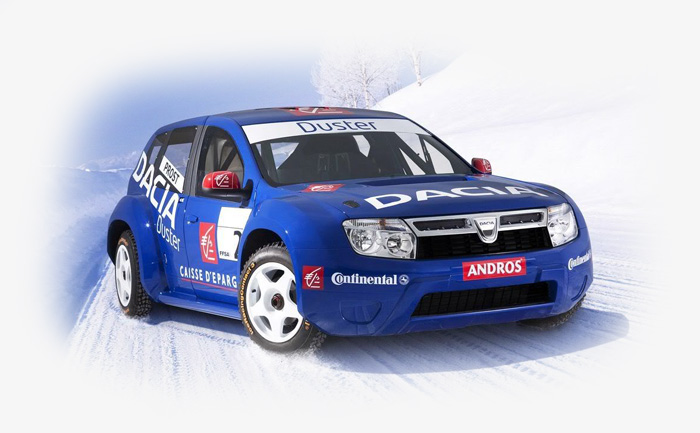
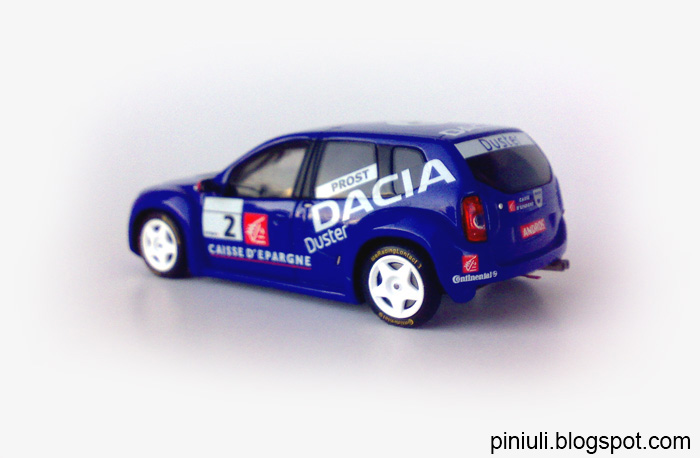
Dacia Duster "Trophee Andros" (2010) - Spark

         Dacia Duster a aparut in 2010 si este primul SUV produs de Dacia. A fost prezentat ca model de competitie ca o avanpremiera a modelului de serie ce urma a fi lansat, in cadrul unei campanii de marketing bine pusa la punct. A fost construit in intregime de Renault Sport, si are putine in comun cu modelul de serie, avand un motor V6 de 3 litri care dezvolta 350 CP, amplasat central. Caroseria din fibra de sticla imita SUV-ul dar varianta de competitie e mai scurta, si mai joasa. Alain Prost a concurat pe aceasta masina la Trofeul Andros, si a iesit pe locul I in cateva etape

         Am reusit, in cele din urma, sa pun mana pe macheta prezentata aici. Este produsa de SPARK, din rasina in serie limitata la 1200 de bucati. Este foarte fin realizata, specific machetelor din acest material, iar rotile sunt fixe. Muchiile sunt bine definite si nu sunt probleme cu aplicarea vopselei sau a decalurilor. Totul este frumos si atent realizat, cele mai impresionante fiind stergatoarele, dintre care unul este amplasat pe geamul soferului. Blocurile optice nu au nituri. Interiorul este detaliat, cu scaune sport inscriptionate si rollbar. Sub macheta se poate vedea o parte din motor, teava de esapament perforata si carligele de remorcare realizate prin fotodecupare. Este prima mea macheta din rasina si este intr-adevar impresionanta.

Dacia Duster "Trophee Andros" (2010) - Spark

          Dacia Duster was launched in 2010, and it's the first SUV made by Dacia. It was presented as a racing model, a preview of the following series model. It was 100 percent build by Reanult Sport, and it has few common features with the series model. It has a 3 liter V6 engine, that could develop 350 hp. The body, made from fiberglass, resembles to the sUV but it's shorter on the racing version, and much lower. Alain Prost raced with this car at the Andros Trophee, and got a first place in a few events.

        I managed, after all to get this scale model, that I presented here. It's produced by SPARK, from resin. It's limited to 1200 pcs. It's very fine made, like resin models usually are, but the wheels are glued and not spinning. The edges are very well defined and there are no problems with the paint and the decals. Everything is beautiful and carefully made, the most impressive being the wipers. The lights don't have rivets. The interior is detailed, with sport chairs and rollbar. Under the model, a part of the engine, perforated exhaust pipe and towing rings are visible.